
Every business owner looking to grow online visibility faces the same recurring question: invest in organic search (SEO) or launch paid campaigns on Google Ads? The answer deserves more than a binary verdict. Each channel serves different objectives, operates on distinct timelines and follows its own budget logic. According to a BrightEdge study (2023), 53% of all website traffic originates from organic search, while paid ads account for 15%. Those figures set the scene, but they only tell part of the story.
SEO: building a long-term digital asset
SEO (Search Engine Optimisation) encompasses the techniques that help a website rank in Google's organic results. It rests on three pillars: content, technical health and authority (backlinks).
Its primary advantage lies in generating recurring traffic without a cost per click. A page that ranks well keeps attracting visitors for months, sometimes years. For an SME with a limited monthly marketing budget, this cumulative asset effect makes a significant difference.
The trade-off is patience. Expect 4 to 8 months before seeing meaningful results in a competitive market. SEO also demands ongoing work: content updates, technical monitoring and link building. An Ahrefs study found that only 5.7% of newly published pages reach Google's top 10 within a year of publication. That number underlines why rigour and consistency are non-negotiable.
Working with an SEO specialist accelerates the process by targeting the right keywords from day one and avoiding technical mistakes that drag down rankings.
Google Ads: immediate visibility, cost per click to manage
Google Ads operates on an auction model: you pay each time someone clicks your ad. The system places your listing at the top of search results instantly for targeted queries.
For an SME launching a new product, opening a location or navigating a slow season, Google Ads delivers a speed of response that SEO cannot match. Search campaigns capture user intent at the precise moment someone looks for your service. The result: qualified, measurable traffic within hours.
The trade-off is financial. Cost per click (CPC) varies by industry: from around EUR 1 for low-competition queries to over EUR 15 in sectors like legal services or emergency trades. According to WordStream (2024), the average CPC in Europe on the Search network sits at EUR 2.69. Once you cut the budget, traffic stops.
Campaign profitability depends entirely on your ability to convert paid traffic into leads or sales. Poor targeting, a weak landing page or absent conversion tracking turns the investment into wasted spend.
Five criteria to guide your decision
Choosing between SEO and Google Ads goes beyond budget alone. Five criteria structure the decision.
Urgency. If you need leads within the next 30 days, Google Ads is the right channel. SEO will not deliver results in that timeframe.
Website maturity. A new site with no content and no domain authority starts from zero in organic search. Google Ads compensates for this lack of visibility while SEO gains momentum.
Available monthly budget. Below EUR 500 per month, SEO offers a more durable return on investment. Above EUR 1,500, a combined strategy becomes worthwhile.
Keyword competition. High CPCs in Google Ads justify investing in SEO to reduce dependence on paid traffic. Conversely, low-competition organic keywords rank quickly without a paid campaign.
Content production capacity. SEO relies on regular creation of relevant content. If you lack the time or resources to maintain a blog or enrich your pages, Google Ads takes over the traffic generation role.
The combined strategy: SEO and Google Ads as complementary channels
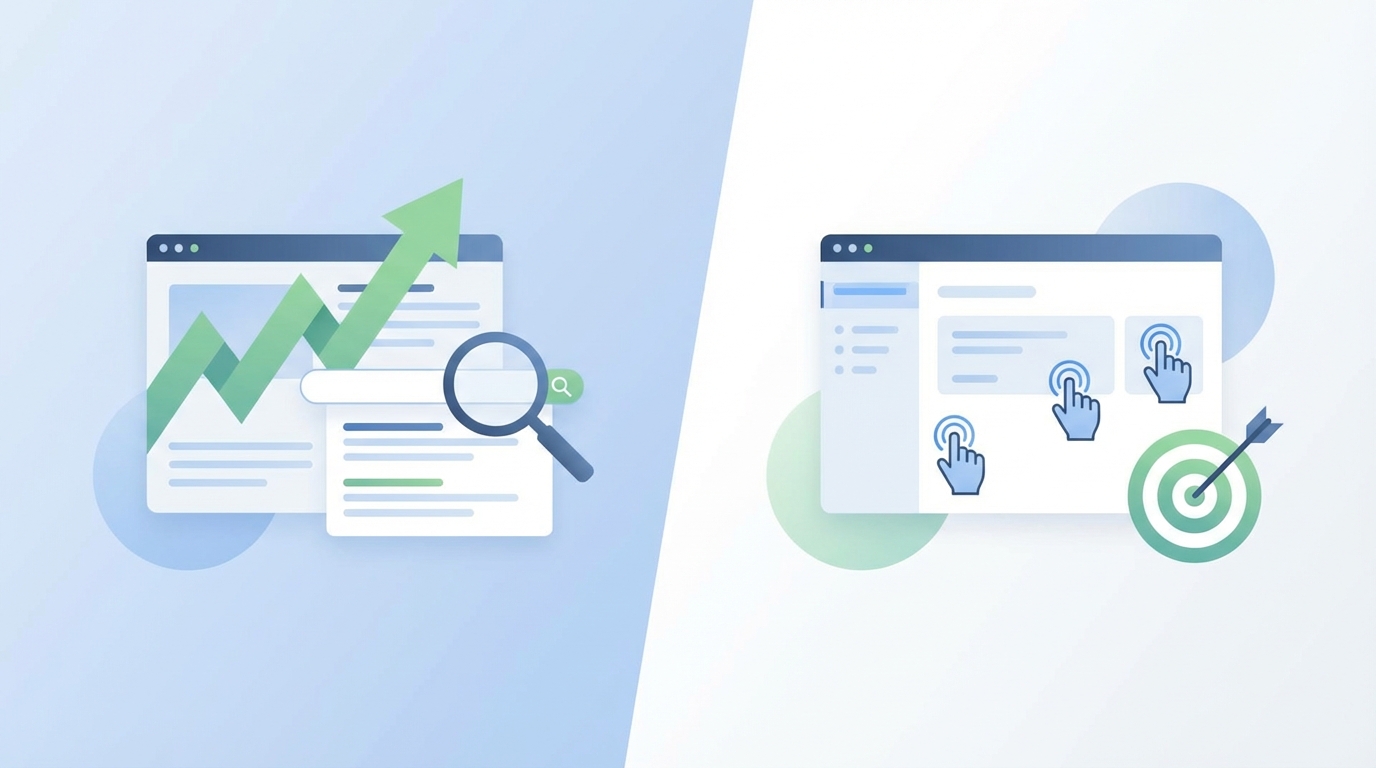
Pitting SEO against Google Ads is like comparing property ownership with renting. One builds equity, the other meets an immediate need. The SMEs that achieve the strongest results use both.
The logic works as follows: Google Ads covers immediate needs (launches, seasonal peaks, promotions) while SEO builds organic visibility. Over time, the share of SEO traffic grows and reduces reliance on paid campaigns.
In practice, Google Ads data fuels the SEO strategy. Search terms that convert well in paid campaigns become priorities for organic content creation. Conversion rate by keyword, CPC and impression volume provide a valuable map of real demand.
This integrated approach sits at the core of the digital acquisition methodology we deploy for our clients. Every euro spent on Google Ads generates data that feeds SEO, and every organic position gained frees up ad budget to test new markets.
AI as an accelerator for both channels
Artificial intelligence is changing how SEO and Google Ads are managed. On the organic side, tools like Surfer SEO and Semrush integrate algorithms that analyse ranking content and suggest semantic optimisations. Keyword clustering, once a manual and time-consuming task, takes minutes.
On the paid side, automated scripts detect irrelevant search terms, adjust bids by time slot and generate ad copy variants. The time saved on day-to-day campaign management frees up bandwidth for strategic thinking.
Integrating AI into both channels reduces management costs and improves targeting precision. For an SME, this means results comparable to those of companies with sizeable in-house marketing teams.
Three common mistakes to avoid
Betting everything on a single channel. An SME that invests 100% of its budget into Google Ads without working on SEO remains dependent on ad spend. Conversely, a company that relies solely on SEO misses high-intent commercial queries.
Ignoring conversion tracking. Without accurate measurement, comparing the profitability of both channels is impossible. Configuring Google Analytics 4 with reliable conversion tracking is a prerequisite before any investment.
Copying a competitor's strategy. Your competitor might be spending heavily on Google Ads because their site is not optimised for SEO. Or the reverse. Each situation requires its own analysis: digital maturity, average order value, sales cycle and catchment area.
How to allocate your budget based on your situation
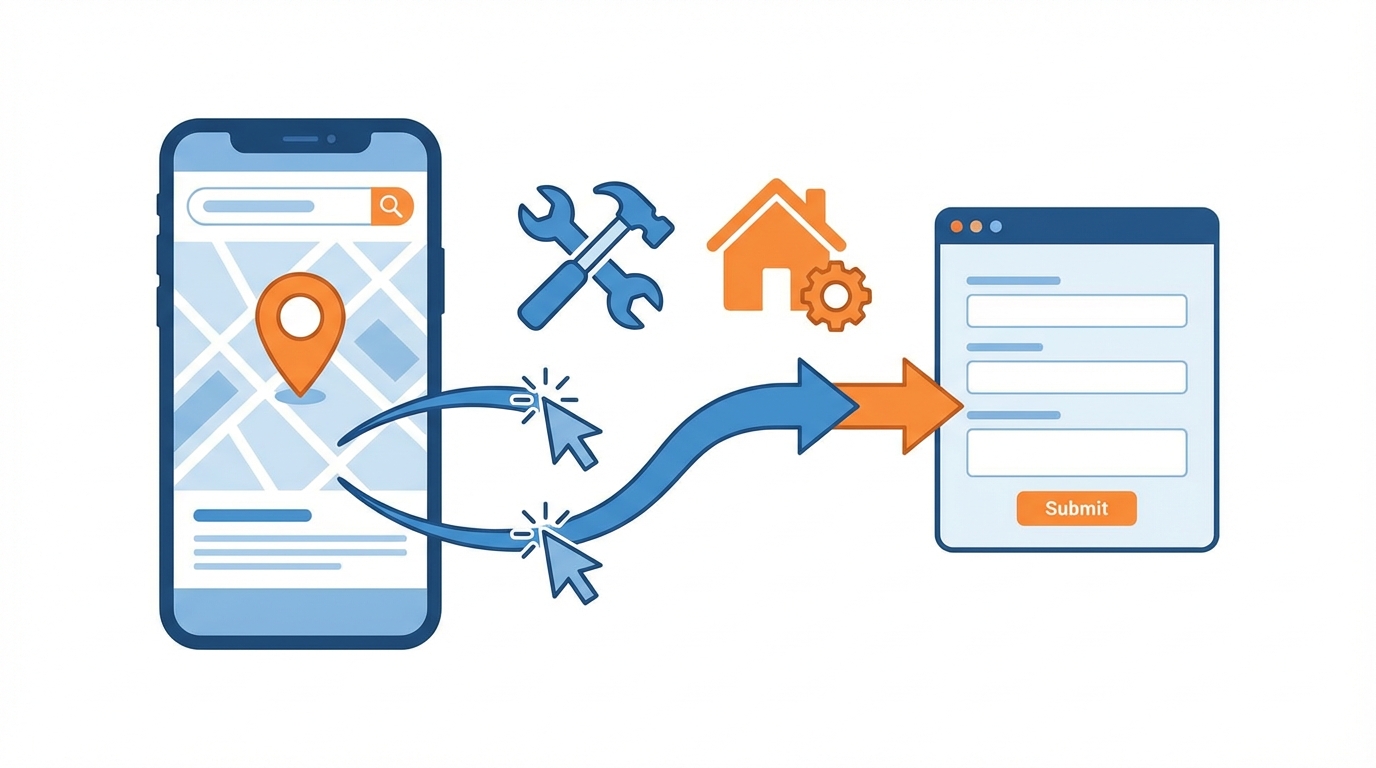
A tradesperson starting out should launch a geo-targeted Google Ads campaign with a budget of EUR 500 to 800 per month. In parallel, an SEO-optimised website starts building organic visibility from day one. This dual approach ensures immediate lead generation while the organic foundation takes shape.
An established SME with an existing but low-visibility site benefits from an SEO audit to identify quick wins: pages to optimise, internal linking gaps and technical fixes. Google Ads spend can then focus on queries where organic rankings are not yet competitive. The audit frequently reveals opportunities that require minimal effort for significant ranking improvements.
An online retailer selling via e-commerce combines Google Shopping (paid) with an SEO content strategy around informational queries related to their products. The complementarity between the two channels reaches its full potential here. Product category pages rank organically for generic terms while Google Shopping captures high-intent buyers ready to purchase.
A service-based business operating in a competitive local market like the Geneva basin faces high CPCs for urgent queries (locksmith, plumber, emergency repairs). SEO captures informational searches at no marginal cost, while Google Ads handles the high-intent, time-sensitive queries where appearing first genuinely matters. Over 12 months, the cost per lead from the SEO channel typically drops below that of the paid channel, while both continue to generate business.
Across every scenario, measurement remains the key. Each month, analyse cost per acquisition by channel, conversion rate and revenue generated. That data allows you to reallocate budget toward whichever channel performs. The ability to shift spending between SEO and Google Ads based on real performance data is what separates a deliberate strategy from guesswork.
Frequently asked questions
Is SEO really free?
SEO generates no cost per click, but it is not free. Content creation, technical optimisation, link building and monitoring require time or a specialist's involvement. The cost sits in production, not distribution.
How long does it take to see SEO results?
Expect 4 to 8 months for meaningful impact on competitive keywords. For local or niche queries, initial results can appear in 2 to 3 months if the site is technically sound.
Does Google Ads cannibalise SEO traffic?
No. Multiple Google studies show that paid and organic clicks are largely additive. Pausing Google Ads does not shift traffic to organic results in equivalent proportions.
What is the minimum Google Ads budget for local campaigns?
For a local business in the French Alps / Geneva area, a budget of EUR 400 to 800 per month provides enough data to test profitability on priority queries. Below that, the data volume is insufficient for meaningful optimisation.
Can you start with Google Ads then switch to SEO?
This is a common and sound approach. Google Ads provides data on which keywords convert. That information shapes the SEO strategy. The transition happens gradually, reducing paid spend as organic traffic grows.